Introduction: Julie Dill and Hans Vestberg Through Two Different Corporate Worlds
Julie Dill and Hans Vestberg represent two distinctly different leadership journeys shaped by industries that are essential to modern life. Dill built a long executive career across energy, natural gas, strategy, communications, and corporate governance, while Vestberg developed his reputation in telecommunications and technology through senior positions at Ericsson and Verizon. Although publicly available biographies do not establish that they are business partners, relatives, or colleagues, their careers offer an interesting opportunity to examine how leadership develops across different sectors.
Their stories also reflect a broader change in corporate leadership. Energy companies have increasingly had to communicate about infrastructure, regulation, sustainability, and stakeholders, while telecommunications companies have faced rapid technological transformation. In both environments, executives have needed more than technical knowledge. They have had to understand people, markets, strategy, communication, and long-term institutional change.
Julie Dill: A Career Built Across Energy and Corporate Strategy
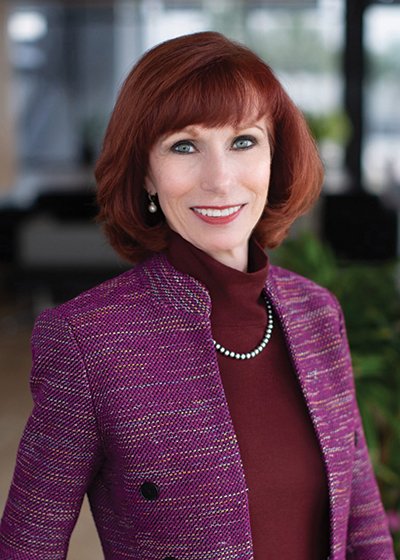
Julie A. Dill spent more than three decades working across major energy organizations. According to the National Association of Corporate Directors, her career included leadership positions at Shell, Duke Energy, Union Gas, and Spectra Energy. She eventually became Chief Communications Officer of Spectra Energy, a position she held until the company’s merger with Enbridge was completed in 2017.
Before moving into communications leadership, Dill held operational, financial, and strategic responsibilities. She served as President of Union Gas Limited in Ontario from 2007 to 2011 and later became Group Vice President of Strategy at Spectra Energy and President and CEO of Spectra Energy Partners. These positions demonstrate a career that moved across several dimensions of corporate management rather than remaining confined to one specialized function.
That breadth is particularly significant in the energy sector, where decisions often involve infrastructure, capital investment, regulation, customers, employees, and public institutions simultaneously. Dill’s career therefore provides an example of how corporate leadership can evolve from operational responsibilities toward strategy, communications, and governance.
Hans Vestberg: From Swedish Telecommunications to Global Technology Leadership
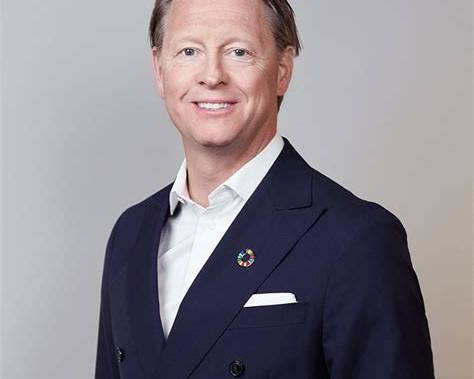
Hans Vestberg followed a very different route. Born in Hudiksvall, Sweden, he studied business administration at Uppsala University and joined Ericsson early in his professional career. Over the following decades, he held leadership roles in several countries before becoming Ericsson’s chief executive.
Vestberg later joined Verizon in 2017 as Chief Technology Officer and President of Global Networks. In 2018, he became Verizon’s CEO, and in 2019 he also became chairman of the company’s board. His leadership at Verizon became closely associated with the company’s investment in 5G and network infrastructure.
His career illustrates the growing importance of technology leadership at the highest levels of large corporations. Telecommunications infrastructure is no longer simply about telephone service. It affects cloud computing, business operations, entertainment, connected devices, artificial intelligence, and everyday communication.
Two Executives, Two Forms of Transformation
| Leader | Major Industry | Notable Leadership Areas | Career Perspective |
|---|---|---|---|
| Julie A. Dill | Energy and natural gas | Strategy, operations, communications, governance | Long-term corporate and infrastructure leadership |
| Hans Vestberg | Telecommunications and technology | Networks, 5G, global strategy, technology | Digital transformation and connectivity |
The contrast is revealing. Dill’s professional history developed around physical infrastructure and the complex business environment surrounding energy. Vestberg’s career has centered more heavily on digital networks and technological transformation. Yet both careers demonstrate the value of moving between disciplines.
Dill’s transition from operational and strategic roles into communications leadership shows how executives can become responsible for explaining complicated businesses to employees, investors, communities, and other stakeholders. Vestberg’s movement from technology leadership into the CEO role illustrates the opposite direction: technical expertise can become central to broader corporate strategy.
Why Their Careers Matter Beyond Their Companies
Corporate biographies can sometimes appear to be lists of positions and dates. However, the more interesting story is what those careers reveal about changing expectations for executives.
For Dill, energy leadership required an understanding of industries where infrastructure can operate for decades. Decisions surrounding pipelines, natural gas distribution, capital projects, and regulation cannot be separated easily from public expectations and long-term planning. Her later board work further reflects the importance of governance after a traditional executive career.
Vestberg’s career reflects a different kind of acceleration. Telecommunications technology changes quickly, and companies must continually invest in networks while anticipating what customers and businesses will need next. Verizon’s own account of his tenure highlights 5G strategy, C-Band spectrum, broadband expansion, and personalized services as significant elements of his leadership period.
Consequently, the two careers offer complementary perspectives on corporate change: one rooted heavily in infrastructure and institutional continuity, the other in technological development and digital connectivity.
The Communication Challenge in Modern Leadership
One particularly interesting point of comparison is communication.
Dill’s senior role as Chief Communications Officer placed communication directly inside the executive structure of a major energy company. That matters because energy businesses often operate under intense public, regulatory, and stakeholder attention. Explaining strategy can therefore become almost as important as developing it.
Vestberg, meanwhile, became a highly visible spokesperson for technological transformation. His public leadership around 5G positioned network investment not simply as an engineering project but as part of a broader vision for how people and businesses connect. The World Economic Forum describes his work as focused on connections spanning mobility, cloud services, and emerging technologies.
In both cases, leadership involves translating complexity. Executives must take complicated subjects and make them understandable to audiences that may not share the same technical vocabulary.
The Human Side of Corporate Careers
Behind corporate titles are careers shaped by geography, education, changing industries, and professional reinvention.
Dill’s experience crossed the United States and Canada and included roles in both operational and corporate environments. She later continued her professional influence through board positions and advisory activities.
Vestberg’s career similarly crossed national boundaries. His work with Ericsson included leadership experience in different international markets, while his later Verizon career placed him at the center of one of the world’s largest telecommunications companies. He has also maintained an interest in sports and social initiatives, including the Jan Vestberg Handball Academy named after his father.
These details add an important human dimension. Executive careers are not simply about corporate titles; they are also shaped by education, movement between countries, personal interests, professional networks, and the institutions people choose to support.
What the Public Record Actually Connects
Searches for Julie Dill and Hans Vestberg can suggest that the two names belong to one shared story. However, the available corporate biographies tell a more nuanced story. Dill’s documented career is primarily associated with the energy sector, while Vestberg’s is centered on telecommunications and technology. The sources reviewed do not establish a direct employment relationship or family connection between them.
That distinction matters because business biographies can easily become blurred when search results combine unrelated executives. A responsible profile should separate documented facts from assumptions. In this case, the most meaningful connection is thematic: both individuals demonstrate how senior leadership can develop through increasingly complex industries and responsibilities.
Vestberg’s Verizon Transition and the Next Chapter
Vestberg’s Verizon chapter formally changed in 2025 when the company appointed Dan Schulman as CEO and Mark Bertolini as chairman. Verizon announced that Vestberg would remain as a special adviser through October 4, 2026, while also remaining on the board until the 2026 annual meeting.
The transition provides another reminder that even prominent executive careers are ultimately part of larger institutional cycles. Companies change leaders as their strategic priorities evolve, and executives move from operational authority toward advisory or governance roles.
For observers, this makes Vestberg’s career particularly useful as a case study in technological transformation, executive succession, and the changing expectations placed on leaders of major communications companies.
A Broader Lesson in Leadership
The stories of Dill and Vestberg suggest that modern corporate leadership is rarely limited to one skill.
Dill’s career combined energy operations, financial experience, strategy, communications, and board governance. Vestberg combined telecommunications expertise, international management, network strategy, and executive leadership. Their industries differ considerably, yet both careers show the importance of adaptability.
Moreover, both demonstrate that leadership can take different forms. One executive may influence an organization through strategy and governance, while another may shape its future through technology and infrastructure. Neither path follows a single formula.
Conclusion: Two Careers, One Larger Corporate Story
Julie Dill and Hans Vestberg come from different professional worlds, but their careers illuminate a common reality of modern business: successful leadership often requires the ability to move beyond a single specialty.
Dill’s journey through energy, strategy, operations, communications, and board service reflects the complexity of managing infrastructure-centered businesses. Vestberg’s path from Ericsson to Verizon illustrates how technology can move from an operational function to the heart of corporate strategy.
Rather than being defined by an unverified connection between them, their stories are more valuable when viewed separately and comparatively. Together, they offer a broader picture of corporate leadership in two industries that quietly shape everyday life: the systems that deliver energy and the networks that keep people connected.