
Introduction
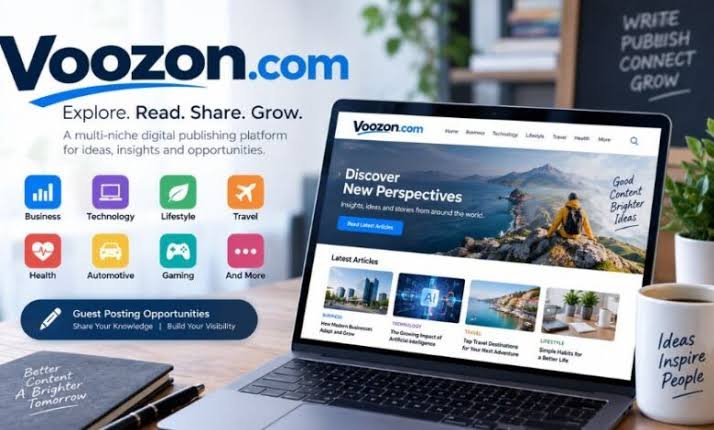
Voozon.com reflects the growing role of websites in connecting readers with information across different areas of modern life. As people increasingly turn to the internet for ideas, explanations, and practical knowledge, multi-topic platforms have become an important part of the digital publishing landscape. However, understanding a website involves more than recognizing its name. Readers also need to consider its purpose, content quality, transparency, and relevance. Exploring Voozon.com through these perspectives offers a useful way to understand its place in the wider online information environment.
Understanding the Digital Identity of Voozon.com
Every website develops an identity through the subjects it covers, the people it serves, and the experience it provides. Voozon.com can be explored from this broader perspective by examining its published material, website structure, and publicly available information. Rather than making assumptions based solely on its domain name, visitors should investigate the platform directly to understand its current purpose and activities.
Furthermore, a website’s identity can change as its content and publishing priorities evolve. Therefore, readers should distinguish between information that is clearly presented by the platform and interpretations that have not been independently verified.
Why Multi-Topic Websites Attract Online Readers
Modern internet users have different interests and often want answers without visiting numerous specialized websites. Multi-topic platforms respond to this behavior by bringing different subjects together in one digital environment. As a result, readers may discover useful information while exploring topics they had not originally intended to research.
Nevertheless, covering many subjects creates editorial responsibilities. Articles should be relevant, clearly written, and appropriate for their intended audiences. In addition, specialized subjects require suitable research and reliable sources. A broad range of content becomes genuinely valuable when readers can find information that is both accessible and trustworthy.
The Importance of Content Quality and Originality
Originality is one of the foundations of responsible online publishing. Readers deserve articles that contribute meaningful explanations rather than simply repeating information already available elsewhere. For publishers, this means developing fresh perspectives, organizing ideas logically, and ensuring that factual claims have appropriate support.
For a platform such as Voozon.com, evaluating individual articles is more useful than judging the entire website from a single page. Readers can examine whether an article answers its central question, provides sufficient context, and distinguishes established facts from personal interpretation. Consequently, content quality should be assessed through evidence and usefulness rather than appearance alone.
Voozon.com and Opportunities in Digital Publishing
Online publishing has created new opportunities for writers, independent contributors, and organizations seeking to communicate with broader audiences. Websites may support these goals through editorial contributions, informative articles, or guest-posting arrangements. However, the specific services currently available through Voozon.com should be confirmed using its official website.
For writers, a successful contribution begins with understanding the audience. A useful article addresses a real question, presents information clearly, and offers something beyond superficial observations. Similarly, businesses should prioritize relevance and editorial standards when evaluating publishing opportunities instead of assuming that every placement will produce immediate traffic or improved search rankings.
How to Evaluate a Website Before Using It
Readers can make better decisions by following a few straightforward principles when visiting an unfamiliar platform.
First, review the About page to understand how the website describes its purpose. Next, look for contact details, editorial information, and relevant policies. Then, examine several articles to assess their accuracy, clarity, and consistency.
Additionally, check important claims against independent sources, particularly when the information concerns health, finances, or personal security. Be cautious if a website requests unnecessary personal information or makes promises that seem unrealistic. These precautions apply to unfamiliar websites generally and should not be interpreted as evidence of wrongdoing by any particular platform.

The Human Side of Online Information
Behind every successful digital publication is a relationship between information and its audience. Readers arrive with questions, limited time, and different levels of knowledge. Therefore, effective articles should respect those differences by explaining complicated ideas without unnecessary jargon.
At the same time, writers need to recognize that publishing carries responsibility. Inaccurate or misleading information can influence decisions long after an article has been read. By prioritizing clarity, fairness, and appropriate research, digital publishers can help create a more useful online environment.
Conclusion
Voozon.com offers a starting point for examining how websites participate in today’s changing publishing landscape. Yet, as with any online platform, its real value depends on the quality of the material available, the transparency of its operations, and the usefulness of its content to readers.
Ultimately, responsible digital publishing is not simply about attracting attention. It is about earning trust through clear communication, original thinking, and careful treatment of information. Readers who approach websites with curiosity and sound judgment are better equipped to identify useful resources and make informed decisions in an increasingly connected world.